Why You Weren't Meant to Grow Alone
May 28, 2026Independence can feel strong. But isolation slowly drains us.
And if you're someone who prides yourself on being capable, self-sufficient, and able to handle anything — this one might hit a little differently. Because the truth is, you were not created to do life alone.
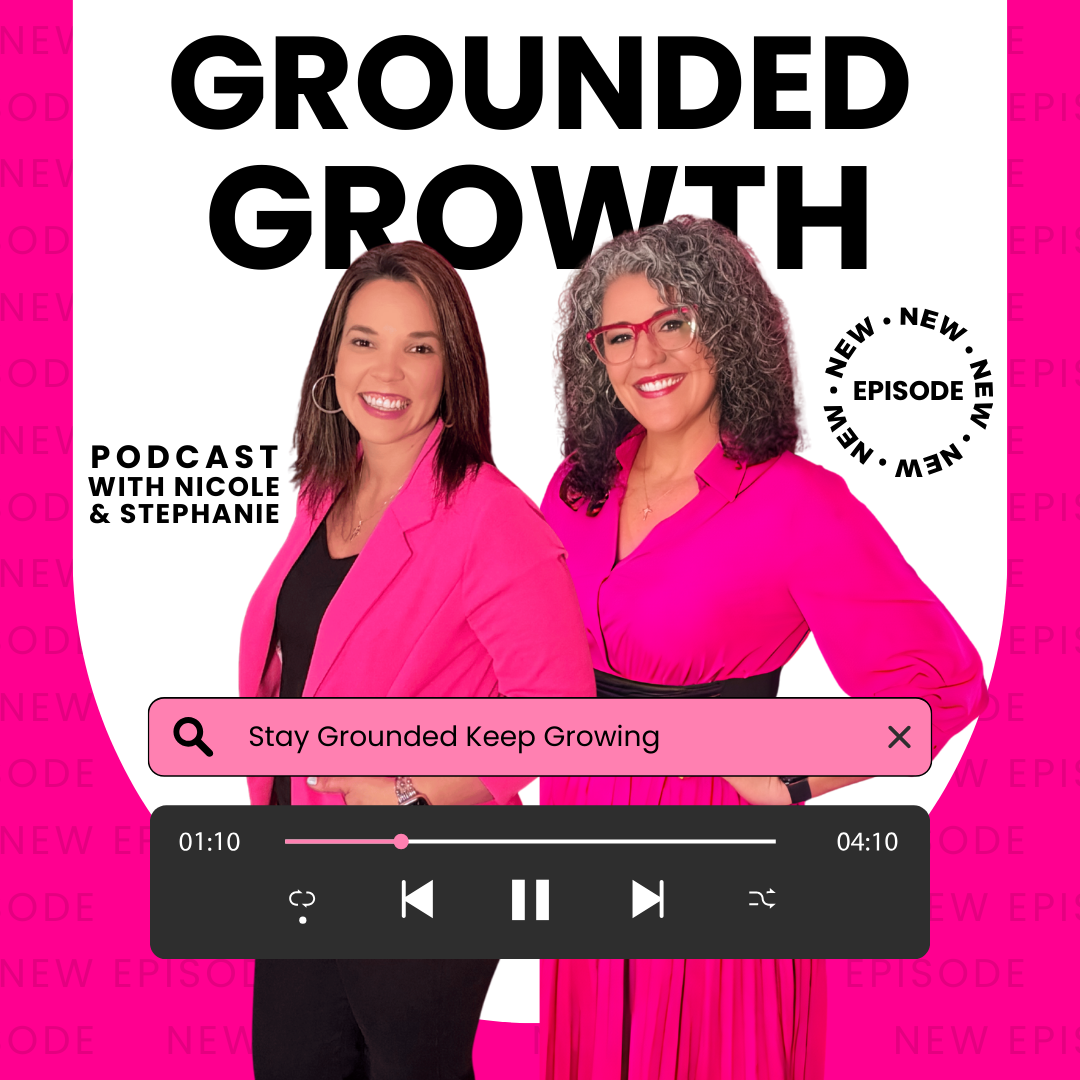
In Episode 21 of the Grounded Growth Podcast, Nicole and Stephanie talk openly about why so many strong women still try to go it alone, what actually happens when we grow in isolation, what healthy community looks like, and the simple ways to begin building the kind of relationships that support real growth.
Why We Try to Do Life Alone
For most of us, doing life alone doesn't start as a goal. It's something we drift into.
We live in a culture that praises independence. Being capable is seen as a strength. Needing help gets labeled as weakness. Many of us were taught early to be strong, to handle it, to not need anyone. Over time, that belief quietly shapes us into women who carry too much and share too little.
There's also a layer of protection here. If we've been hurt, misunderstood, or let down, it can feel safer to handle things ourselves. Our pride tells us not to be a burden. Our fear tells us vulnerability is risky. And our past experiences teach us to guard our hearts.
But here's the truth: we weren't created to be independent. We were created to be dependent on God and mutually dependent on each other. And when we resist that, we're actually stepping outside of the design God created for our growth.
Nicole admits she hesitates to ask Stephanie for help because she doesn't want to add to her plate. Stephanie admits she tends to isolate and go into fix-it mode when she's overwhelmed. Both are patterns so many women recognize in themselves. The problem is that when we minimize our needs, we end up just trying to keep up with everything alone.
And sometimes, not wanting to be a burden IS the burden. Letting someone in allows them to come alongside you in prayer or in practical help. It also lets them feel needed. Connection goes both ways.
What Happens When We Grow Alone
Trying to grow in isolation costs more than we realize.
Stress feels heavier when you're carrying everything internally. There's no outlet for the pressure. Mental and emotional weight builds until we burst.
Perspective narrows. You're only seeing your own point of view. Your thoughts feel louder, less grounded in truth, and harder to interpret. You start overthinking everything and miss out on the wisdom and encouragement of the people around you.
You also miss out on encouragement in the exact moments you need it most. When you're telling yourself you're not enough, or that you can't do this, you need a voice of truth to remind you that you can. Not because that voice isn't available — but because you haven't invited anyone into that space.
And as Christina Fox writes in Closer Than a Sister, when we don't share our needs, we actually limit others from using their God-given gifts to serve us. There is humility in both giving and receiving. Avoiding community means we miss both sides of that gift.
What Healthy Community Actually Is
Healthy community isn't about needing people to function. It's about being supported as you grow.
It's rooted in something deeper than connection — it's rooted in our shared identity in Christ. Community is an overflow of our union with Christ, which means caring for one another is not just horizontal (practical help) but also vertical (spiritual encouragement). It's an act of worship.
Community also reflects the heart of Jesus. He didn't live in isolation. He walked closely with others, served them, and ultimately gave His life for us. We're called to reflect that same love — one that shows up, listens, serves, and walks alongside.
Healthy community is also safe support, not constant access. Not everyone needs full access to your life. Jesus had His twelve disciples — His inner circle. You get to choose who you let speak into your life. Some friends may know everything. Others may know a specific slice. That's okay. Build a network of trusted people who are like-minded and encourage your growth.
And most importantly, healthy community is built on encouragement instead of comparison. There's no judgment. No measuring your faith against someone else's. Just accountability, shared growth, and the freedom to celebrate each other's wins and acknowledge each other's weaknesses.
Four Simple Ways to Build Healthy Community
Nicole and Stephanie share four simple ways to begin building community that lasts:
- Invest in a few safe relationships instead of many surface ones. You don't have to know everyone. You just need a core group of people to lean on. Choose depth over quantity and build trust intentionally.
- Be honest instead of always acting so strong. Let your guard down. Share your real struggles. Be vulnerable. Stop pretending. When you find the right people, there is no judgment — and the weight on your shoulders lifts.
- Make time for connection instead of waiting for it to happen. Schedule it. Time-block it. Put it on your calendar. Reach out first. Connection rarely happens by accident — it happens because someone chose it.
- Surround yourself with people who encourage growth. Build boundaries around toxic dynamics. Align with people who share your values. Avoid environments that drain you. If you dread walking into the room, that is the wrong community to be part of.
- Stephanie also shares an important reframe for the initiators out there. If you're the one always hosting, inviting, or planning, that's not a one-sided relationship — it's a strength. You are cultivating the community you need. People show up when you invite them. And as you keep showing up, the reciprocation grows.
Community Is Give AND Receive
Closer Than a Sister reminds us that there is always something we can offer — our time, our presence, our encouragement. But healthy community also means being willing to receive.
One question Stephanie asks herself after conversations: did I leave this conversation knowing how to pray for that person? If not, maybe you talked too much about yourself. Community is about the other person as much as it is about you.
Tell the people you love that you love them. And why. Don't let them guess. Remind them they matter. Be their biggest cheerleader. Celebrate their wins with genuine joy — not comparison.
And learn to sit with people in both joy and sorrow. Sometimes the greatest gift you can give a friend is simply your presence. You don't have to fix it. You just have to be there. Point each other back to Christ when the time is right.
Community doesn't require perfection. It requires consistency and willingness. When you mess up, ask for forgiveness and move forward.
The Faith Layer: Community Is God's Design
Hebrews 10:24–25 — And let us consider how to stir up one another to love and good works, not neglecting to meet together, but encouraging one another.
This passage is such a clear picture of what community is meant to look like. To stir one another up. To encourage. To equip and train each other in biblical truth. To disciple one another through Christian life.
Our faith was never meant to be lived in isolation. God gave us the church. He gave us each other. And He uses people in our lives to strengthen us, refine us, and remind us of truth when we forget.
Closer Than a Sister reminds us that when we serve and care for others, it reflects the very nature of God Himself. The Trinity — Father, Son, and Holy Spirit — work together in perfect unity and service. When we step into community, we're reflecting that same design.
Which means community isn't just beneficial. It's part of how God grows us.
In This Episode, You'll Hear
- Why independence feels safer but quietly drains us
- How pride, self-reliance, and past hurt push us into isolation
- What actually happens when we try to grow alone
- What healthy community really is — and what it's not
- The difference between safe support and constant access
- Four simple, practical ways to build healthy community
- How community reflects the heart of Christ
Continue the Conversation
If this episode resonated with you, here are a few next steps:
- Listen to the Podcast: You can listen to Episode 21 and explore the full Grounded Growth podcast here: www.groundedgrowth.org/podcast
- Start With One Healthy Relationship This Week: Reach out to someone. Open up when someone asks how you're really doing. Show up at the thing you've been avoiding.
- Grab Your Weekly Reset: Our free Weekly Reset guide helps you plan your week with intention: www.groundedgrowth.org/WeeklyReset
Stay grounded and keep growing.
Browse Our Complete Blog Series
See all our blog posts on how it's about showing up consistently and trusting that small steps create lasting change.